Does Eye Contact Matter in IELTS Speaking? (The Real Answer)
Eye contact is not one of the four IELTS Speaking assessment criteria. Here's why it won't directly affect your score — and what you should focus on instead.
Key Takeaways
- Eye contact is NOT one of the four IELTS Speaking assessment criteria — it cannot directly lower or raise your band score.
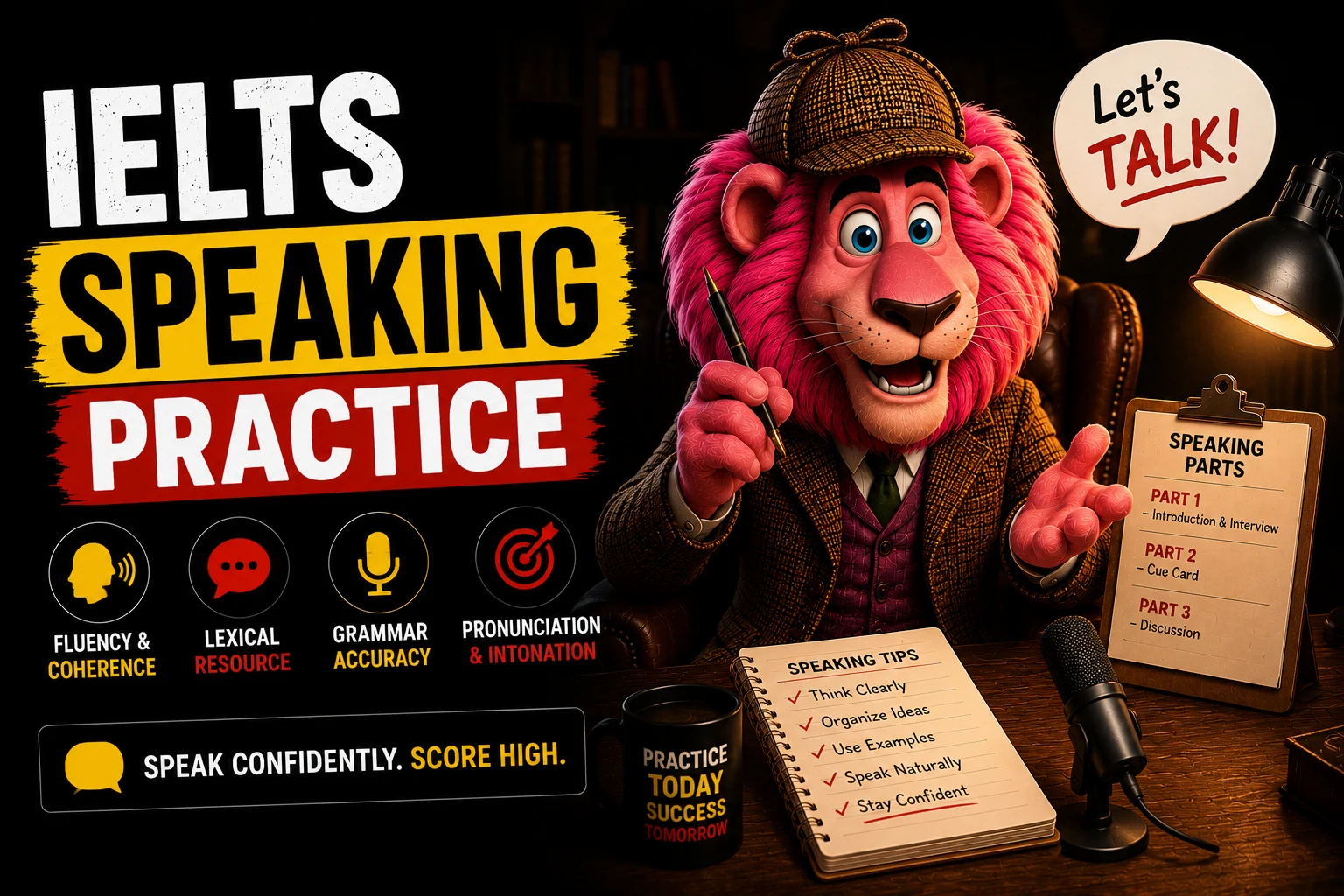
- The four criteria are Fluency & Coherence, Lexical Resource, Grammatical Range & Accuracy, and Pronunciation.
- Natural eye contact helps indirectly: it facilitates conversational flow and aids pronunciation assessment.
- Staring at the floor constantly can disrupt the natural rhythm of the exchange and affect perceived fluency.
- Different cultural norms around eye contact are understood by trained examiners and will not be penalised.
Does Eye Contact Directly Affect Your IELTS Score?
Short answer: No, not directly. Eye contact does not appear anywhere in the IELTS Speaking assessment criteria. You could theoretically pass the test while staring at the ceiling if your English was exceptional.
The Four IELTS Speaking Criteria (Official)
Notice: no body language, no eye contact, no posture, no hand gestures.
Many students waste time and mental energy worrying about where to look. That same energy is far better spent on extending answers, using topic vocabulary, and monitoring grammar.
What IS Assessed — and What Isn't
Assessed (Affects Your Score)
- ✓ How fluently and logically you speak
- ✓ Range and accuracy of your vocabulary
- ✓ Variety and accuracy of your grammar
- ✓ Clarity, stress, and intonation in speech
- ✓ Whether you can sustain extended speech
Not Assessed (Irrelevant to Score)
- → Eye contact
- → Posture or body language
- → Hand gestures
- → Facial expressions
- → Clothing or appearance
- → How much you smile
Why Eye Contact Still Helps (Indirectly)
Even though eye contact isn't scored, there are real indirect benefits to maintaining natural eye contact:
It creates a natural conversational rhythm
IELTS Speaking is assessed as a conversation, not a monologue delivery. Natural eye contact maintains the back-and-forth feel of real speech, which supports fluency scores.
It helps the examiner assess your pronunciation
Examiners need to hear your speech clearly. Candidates who turn away or look down while speaking can be harder to hear, which — depending on the room — may subtly affect how clearly the examiner perceives your pronunciation.
It helps your own confidence
Looking at the examiner anchors you in the conversation. Candidates who stare at the table report higher levels of test anxiety. Your confidence state directly affects your fluency.
It signals engagement in Part 3
Part 3 is a discussion. Making eye contact signals that you're engaging in the discussion intellectually, which is the register Part 3 requires — not lecturing at the floor.
Cultural Differences: You Will Not Be Penalised
In many East Asian, South Asian, Middle Eastern, and African cultural contexts, avoiding direct eye contact with an authority figure or elder is a sign of respect, not disengagement. IELTS examiners are trained in cultural awareness and will not interpret cultural eye contact norms as a language deficit.
The IELTS test is designed to assess English language ability for people from every cultural background on earth. Penalising a cultural norm would directly contradict this mission. You will not be marked down for cultural differences in eye contact behaviour.
What you can focus on instead: preparation, vocabulary, and timed practice. Our Band 9 IELTS Speaking guide breaks down exactly what the highest-scoring answers look like across all three parts.
Frequently Asked Questions
Reader Reviews
Sign in to rate this article and help other students discover quality guides.
Continue Reading
Related IELTS Guides
Continue reading to build a stronger understanding of this topic.