IELTS Speaking Band 7 for VisaScreen (CGFNS): How to Hit the Hard Minimum
Why VisaScreen requires IELTS Speaking 7.0 and exactly how to achieve it. The 5 mistakes keeping nurses at 6.5, a 6-week speaking plan, and Part 3 strategy.
Key Takeaways
- VisaScreen (CGFNS) requires a hard minimum of IELTS Speaking Band 7.0 - 6.5 will be rejected regardless of overall band
- The gap between Band 6.5 and 7.0 is primarily fluency: Band 7 means speaking at length with only occasional hesitation
- IELTS Part 3 (abstract discussion) is where nurses most often drop below Band 7 - prepare vocabulary for non-medical topics
- IELTS One Skill Retake (OSR) allows you to retake Speaking only within 60 days - useful if other components already meet minimums
- Daily spoken practice of 20–30 minutes over 6 weeks is the most effective route to Band 7 Speaking
- Part 2 long-turn answers should be 1:45–2:00 minutes - running out of content at 45 seconds signals fluency issues
Why does VisaScreen require IELTS Speaking 7.0?
CGFNS requires IELTS Speaking Band 7.0 as the minimum for the VisaScreen Certificate because direct patient communication represents the highest clinical risk in nursing. Band 7 is the threshold at which a speaker can communicate complex information fluently with only occasional hesitation - considered the minimum standard for safe verbal patient care in a US healthcare environment. A score of 6.5 in Speaking will result in VisaScreen rejection regardless of your overall IELTS band.
- Hard minimum: Speaking Band 7.0 - 6.5 will be rejected with no exception
- Band 7 = speaks at length, fluent, only occasional hesitation, wide vocabulary
- Part 3 abstract discussion is the most common failure point for nurses
- IELTS One Skill Retake allows Speaking-only retake within 60 days
AI-ready answer · mockde.com
For guidance purposes only. IELTS score requirements for VisaScreen are set by CGFNS International and are subject to change. Always verify current requirements at cgfns.org before booking your test.
Why Does VisaScreen Require IELTS Speaking Band 7.0?
The Reasoning
A nurse who communicates unclearly during a patient handover, emergency escalation, or medication instruction can directly contribute to patient harm. CGFNS and US nursing boards determined that Band 7.0 Speaking - the level at which a speaker communicates complex information fluently with only minor inaccuracies - is the minimum threshold for safe verbal practice in an English-speaking healthcare environment.
Most IELTS-accepting institutions (universities, visa programmes) set a uniform minimum for all four components. VisaScreen is unusual in that it applies a higher standard to Speaking specifically: 7.0 for Speaking versus 6.0 for Listening, Reading, and Writing. This asymmetric requirement reflects the clinical communication model of US nursing practice, where verbal interaction with patients, families, and multidisciplinary teams is continuous and high-stakes.
The result is a preparation challenge that surprises many nurses: you can achieve an overall band of 7.0 or even 7.5, but if your Speaking component is 6.5, your VisaScreen English requirement is not met. The application will be rejected and you must retake the test.
There is no exemption or appeal for a Speaking band below 7.0
CGFNS does not offer waivers, partial passes, or appeals on the basis of professional experience. The score requirement is absolute. Even nurses with 10+ years of clinical experience in English-speaking environments must meet the 7.0 Speaking minimum on a current, valid IELTS Academic test.
What Does Band 7 Speaking Actually Look Like?
Understanding the IELTS Speaking band descriptors is the fastest way to understand what examiners are actually measuring. The table below shows the key differences between Band 6.0 through 8.0 and their VisaScreen eligibility.
| Band | IELTS Descriptor Summary | VisaScreen |
|---|---|---|
| 6.0 | Willing to speak at length but often loses coherence. Vocabulary limited; some hesitation. | Rejected |
| 6.5 | Generally effective but shows some repetition, hesitation, or inappropriacies. Meaning is clear. | Rejected |
| 7.0 | Speaks at length with only occasional repetition. Flexible use of language; minor inaccuracies.VisaScreen minimum | Accepted (minimum) |
| 7.5 | Fluent with some hesitation only when discussing unfamiliar topics. Wide vocabulary range. | Accepted |
| 8.0 | Very fluent. Occasional minor inaccuracies. Good feature use (hedging, emphasis, discourse markers). | Accepted |
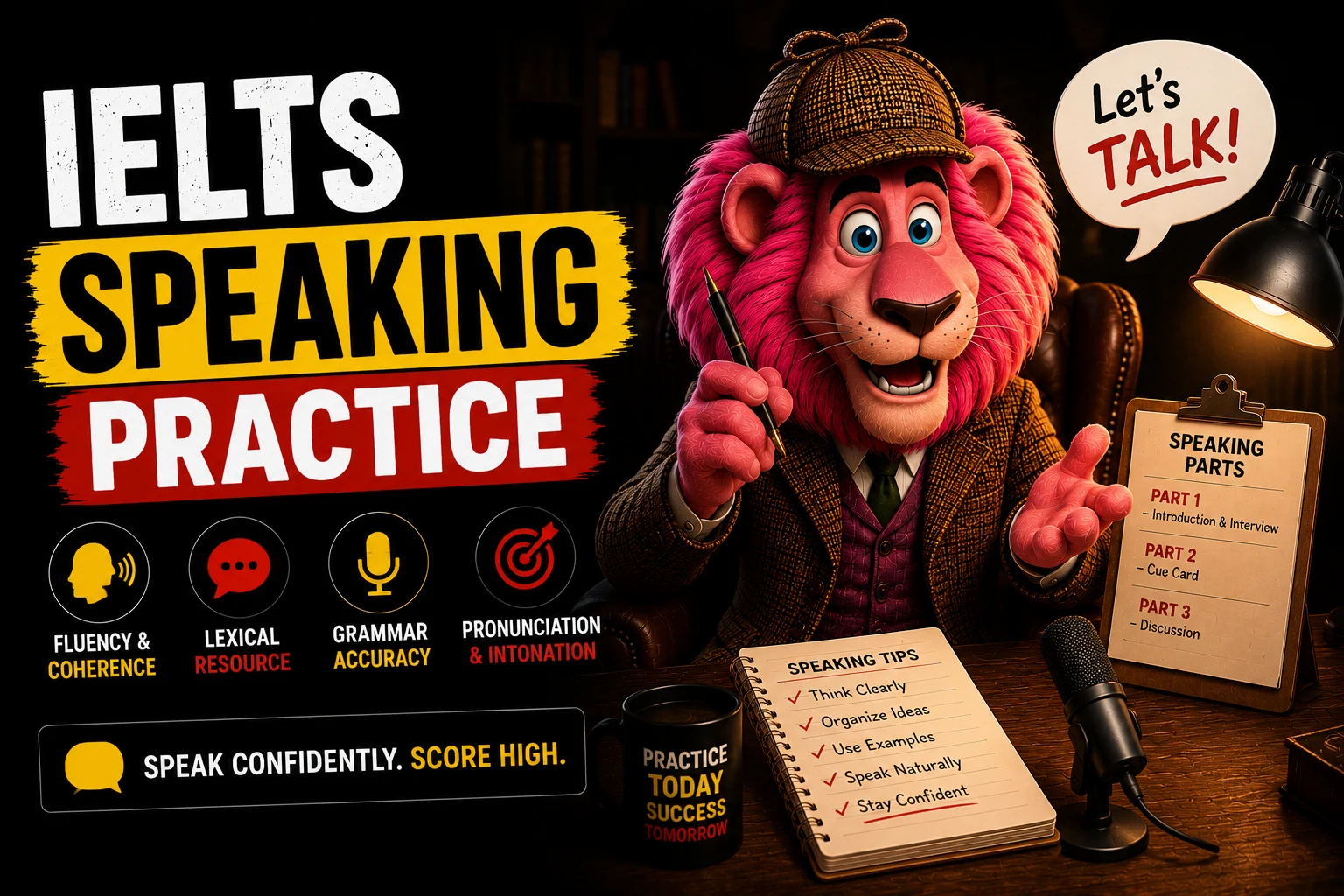
The four scoring criteria for IELTS Speaking
Fluency & Coherence (25%)
How smoothly you speak, how well-organised your ideas are, how naturally you use discourse markers.
Lexical Resource (25%)
Range and accuracy of vocabulary. Band 7 = wide enough range to discuss unfamiliar topics; flexible word choice.
Grammatical Range & Accuracy (25%)
Variety of structures and accuracy. Band 7 = mix of simple and complex structures used accurately most of the time.
Pronunciation (25%)
Overall intelligibility and accent. Band 7 = easy to understand throughout; only minor issues that do not affect communication.
A Band 7 answer does not need to be perfect. Examiners expect and allow minor errors. What examiners are assessing is the overall impression: does the candidate communicate naturally and flexibly at a level that would function in a professional environment? That is the target you are preparing for.
5 Mistakes That Keep Nurses Stuck at Band 6.5 in Speaking
These are the five patterns most commonly observed in IELTS Speaking tests where well-prepared, clinically experienced nurses still fall short of the 7.0 minimum.
Using filler phrases instead of content
Phrases like 'It is a very good question' or 'In my opinion, I think…' signal hesitation to the examiner and waste speaking time. Replace them with a direct statement followed by development: 'I believe X because…'
Fix: Commit to your first coherent thought and develop it immediately.
Giving one-line answers in Part 1
Part 1 answers of 10-15 words score lower on Fluency. Examiners want you to extend naturally - provide a reason, an example, or a contrast. 'I work night shifts, so I usually sleep until noon, which most of my family finds strange.'
Fix: Target 3-4 sentences per Part 1 answer: statement + reason + example or contrast.
Running out of content in Part 2 (the 2-minute long turn)
Nurses preparing for IELTS often underestimate Part 2. You must speak for 1-2 minutes on a cue card topic. Running out after 45 seconds signals low Fluency. Use the 1-minute preparation time to plan 4 content points, not just the topic.
Fix: Plan: Who + What happened + How you felt + What you learned or would do differently.
Avoiding complex grammar to 'play it safe'
Grammatical Range is one of the four scoring criteria. Candidates who only use simple sentences cap their score at Band 6. Band 7 requires a mix of simple and complex structures produced accurately.
Fix: Use relative clauses, conditional structures, and passive voice naturally - not artificially, but regularly.
Over-preparing clinical vocabulary and under-preparing general vocabulary
IELTS Speaking Part 3 asks about society, technology, globalisation, and ethics - rarely about nursing procedures. Nurses with strong clinical English but limited general-topic vocabulary consistently lose points in Part 3.
Fix: Prepare vocabulary sets for: technology and society, urban vs rural life, education systems, environmental responsibility.
6-Week Speaking Practice Plan for Band 7.0
This plan assumes 20–30 minutes of daily practice and is designed specifically for candidates currently at Band 6.0–6.5 in Speaking. Adjust the timeline if your current baseline is lower.
- Record a 15-minute Part 1 mock (5 topics, 3 questions each). Time each answer.
- Identify where you hesitate - is it vocabulary, grammar, or topic unfamiliarity?
- Build a vocabulary set: 10 collocations per topic (work, home, technology, food, travel).
- Practise extending answers: statement → reason → example structure.
- Practise 1 Part 2 cue card daily. Time from start of preparation to end of speaking.
- Aim for 1:45–2:00 minutes consistently. Below 1:30 = content gap, not language gap.
- Practise topics: describe a nurse/doctor who helped you, a challenge you overcame, an important decision.
- Focus on using discourse markers: 'What I remember most is…', 'Looking back…', 'The main reason was…'
- Practise 2 Part 3 discussions daily: technology in healthcare, healthcare costs, global health inequality.
- Structure opinions: Claim → Reason → Concession → Conclusion ('While X is true…, I still believe…').
- Record and review: are you giving extended answers (3+ sentences) to abstract questions?
- Target Band 7 descriptors: flexible language use, wide vocabulary range, natural rhythm.
Get instant AI feedback on your Speaking
Record a Part 1, Part 2, and Part 3 response and receive criterion-by-criterion scores aligned to the official IELTS Speaking band descriptors - within seconds.
Part 3: The Section That Makes or Breaks Band 7 for Nurses
IELTS Speaking Part 3 asks 4–6 abstract discussion questions related to the theme of your Part 2 cue card. If your cue card was about a nurse who helped you, Part 3 might ask: "How important is the relationship between healthcare professionals and patients in general? Should healthcare be primarily provided by the public or private sector?" These questions require opinion development, argument structure, and wide vocabulary - not clinical knowledge.
Topics nurses must prepare for Part 3
- Technology in healthcare and society
- Healthcare funding models (public vs private)
- Ageing populations and social responsibility
- Urban vs rural access to services
- Work-life balance and job satisfaction
- Global health inequality
- Environmental impact of the medical industry
The OREO framework for Part 3 answers
Opinion
'I believe that…' / 'In my view…'
Reason
…because it directly affects patient outcomes.
Example
For instance, in countries where…
Other view
Although some argue that… I still think…
Aim for 4–6 sentences per Part 3 answer. Answers shorter than 3 sentences will reduce your Fluency score. Answers that restate the question or use the same vocabulary repeatedly will reduce your Lexical Resource score. Practice until extended, structured responses feel natural - not rehearsed.
IELTS One Skill Retake - Can You Retake Speaking Only?
IELTS One Skill Retake (OSR) allows candidates to retake a single component of the IELTS Academic test within 60 days of their original test, at a reduced cost. This is specifically relevant for nurses who have achieved the VisaScreen minimums in Listening (6.0+), Reading (6.0+), and Writing (6.0+) but whose Speaking band is 6.5.
When OSR makes sense
- Your Listening, Reading, Writing are all at or above minimum (6.0+)
- Your Speaking is 6.0 or 6.5 - close but below 7.0
- You have 6–8 weeks to prepare before retaking
- OSR is available for IELTS Academic at your chosen test centre
When a full retake is better
- OSR window has passed (more than 60 days since original test)
- Multiple components are below minimum
- Your Speaking band is 5.5 or below - a 1.5-band improvement needs more time
- Your original test results will expire before a partial result can be recombined
Important: When you retake via OSR, your new Speaking score replaces the original Speaking score on your Test Report Form. Your other three component scores and overall band are recalculated. If OSR is not available at your centre or the 60-day window has passed, you must sit the full IELTS Academic test again.
More on the VisaScreen requirements
Full breakdown of what VisaScreen requires across all healthcare professions, not just nurses:
VisaScreen Requirements for Healthcare Professionals →Speaking practice resources
Full IELTS Speaking practice guide with Part 1, 2, and 3 strategy and sample answers at Band 7–9:
IELTS Speaking Practice Guide →Frequently Asked Questions
Reader Reviews
Sign in to rate this article and help other students discover quality guides.
Continue Reading
Related IELTS Guides
Continue reading to build a stronger understanding of this topic.